The parts that change what a session costs
Roulette Guides: Rules, Odds, Payouts and Wheel Variants Explained
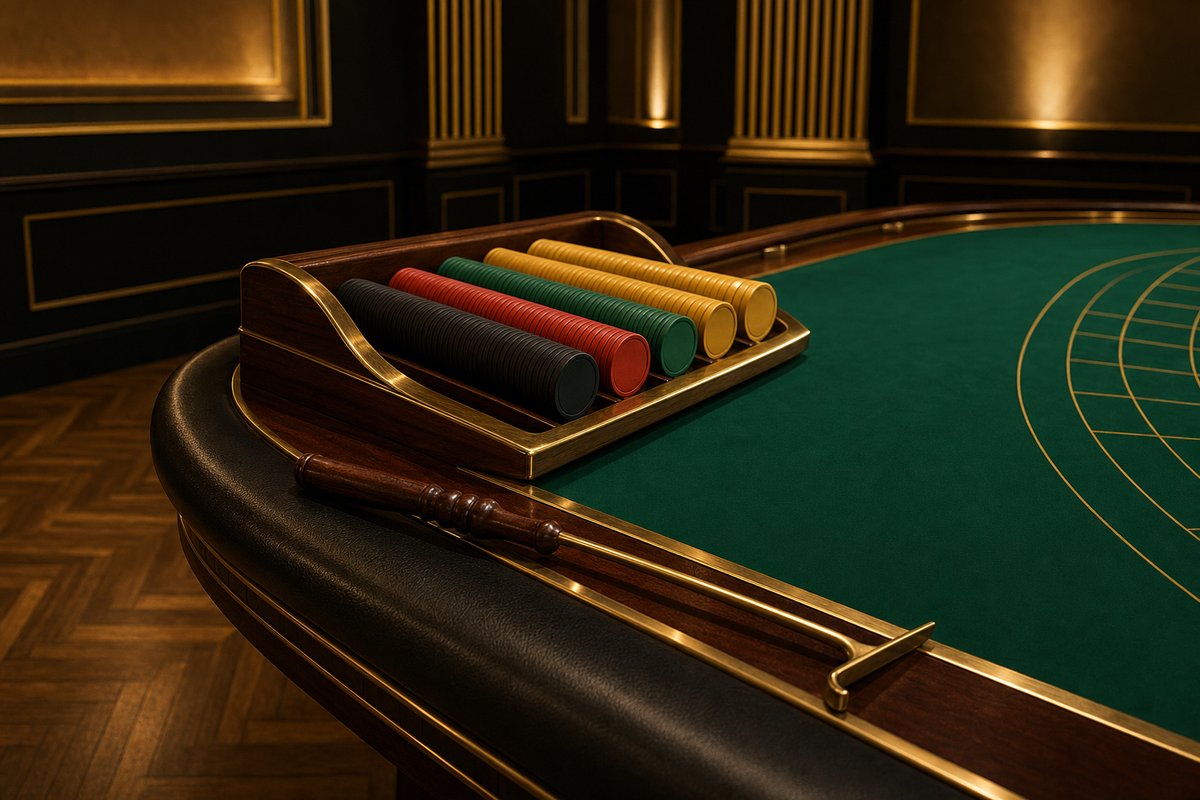
The mathematics of roulette is simple enough to hold in your head, and knowing it changes which table you sit at. These guides cover the parts that affect what a session costs you, starting with the one that costs the most: which wheel you chose.
-
-

-
If you read only one of these, make it the wheel comparison. Choosing a single-zero table over a double-zero one halves the house edge, and it is the only decision on this list that pays you back on every single spin without requiring you to learn anything else. Compare the two wheels.
The one decision that halves what a session costs
A European wheel holds 37 pockets, numbered 0 to 36. An American wheel holds 38, because it adds a second zero. Nothing else about the two games differs in any way that affects your money.
That single pocket is the whole of the difference in cost. A straight-up number pays 35 to 1 on both wheels, while the true odds against it are 36 to 1 on the European layout and 37 to 1 on the American one. The payout is set short of the true odds by the same amount every time, and the size of that shortfall is the house edge: 2.70% on the single-zero wheel and 5.26% on the double.
In money, at a £10 stake, the European wheel expects to keep 27p of it and the American wheel 53p. You are paying roughly twice as much for the identical game, and the choice is usually two clicks apart in the same lobby.
A French table is a single-zero wheel with one rule added. Under La Partage, a zero returns half your stake on the even-money bets, which takes the edge on those bets alone down to 1.35%. It is the cheapest roulette a British player can sit at, and it is also the hardest to find, which is the first thing worth knowing about the difference between the two wheels.
Every European bet costs the same, and that is the useful part
Roulette is unusual among casino games in that the edge does not vary with what you back. One number, a split, a corner, a dozen, or eighteen numbers at once: on a single-zero wheel every one of them expects to cost you the same 2.70% of what you stake.
This falls out of how the payouts are constructed. Each one is priced against the 36 numbers and ignores the zero, so each carries exactly one pocket of shortfall. Stake £10 across a scatter of arbitrary numbers and the expected loss still comes to 27p.
What changes between bets is not the cost but the shape of the ride. A straight-up number wins about once in 37 spins and pays enough to matter when it does; an even-money bet wins nearly half the time and pays little. Choosing between them is a question of how much variance you want, not of which is better value, and anyone selling you a bet as better odds on a European wheel is selling you variance.
There is one real exception, and it lives on the American felt. The five-number bet covering 0, 00, 1, 2 and 3 pays 6 to 1 and carries a 7.89% edge, worse than the wheel it sits on. Every bet with its own payout and true odds is set out in the odds and payouts guide.
Why no staking pattern changes the arithmetic
The most common systems are progressions. Martingale doubles the stake after a loss so that one win recovers the sequence; d'Alembert climbs and falls a unit at a time; others reverse the logic and raise stakes after a win.
All of them share a structure and a ceiling. The edge applies to each spin independently, so the expected cost of a session is the sum of the expected costs of its spins, and reordering the stakes cannot change a sum. Meanwhile every doubling sequence ends at the table maximum or at the end of your money, and both of those are finite in a way the sequence is not.
That ceiling arrives sooner than most people expect. Starting at £5 and doubling after each loss, the eighth bet in the sequence needs £640 on the felt, and by the time it is due £635 has already gone. A table maximum of £500 blocks that eighth bet outright, which leaves the £635 where it is and removes the single spin the whole progression was built to reach.
A system does deliver something, which is why they persist: it converts an open-ended session into a set of rules, and rules feel like control. The arithmetic is indifferent to how you feel, and the betting system simulator is built to show that directly, charting the average net result across thousands of rounds rather than the short runs where a progression looks like it is working.
A live table and an RNG table are the same edge at different speeds
A live table is a real wheel in a broadcast studio with a dealer spinning it. An RNG table is software. The house edge on a single-zero wheel is 2.70% in both cases, and no amount of studio production changes that number.
The difference that reaches your balance is pace. A live table is paced by the room: bets close, the wheel is spun, the result is called, and the cycle takes as long as it takes. An RNG table runs as fast as you are willing to click.
Because the edge is charged per spin, the spin rate is what turns a percentage into an hourly cost. Two players at identical stakes and identical edges can lose very different amounts in an evening purely on how many spins they got through.
The calculation is worth doing once with your own numbers. Multiply your stake by the edge to get the cost of one spin, then multiply that by however many spins you actually complete in an hour. At £10 a spin on a single-zero wheel the first figure is 27p, so forty spins costs you around £11 and a hundred spins costs £27. Neither the stake nor the edge moved between those two numbers. Only the clock did.
That is the useful lens for comparing live dealer sites, and it is worth more than any comparison of lobby design.
Where to start, depending on what you already know
If you have never played, begin with how to play roulette. It covers the layout, what the inside and outside sections of the felt actually mean, and the sequence of a round from the betting window to the payout.
If you know the game and want the numbers, the odds and payouts guide is the reference: every bet, its payout, its true chance, and the arithmetic that connects them. If you are about to choose a table, read the wheel comparison first, because it is the only decision here that pays you back on every spin without requiring you to learn anything else.
When the reading is done, the playable wheel is the cheapest way to make any of it stick. It stakes nothing and settles nothing, so it is a place to see the geometry of the felt rather than to form beliefs about winning.
What these guides deliberately leave out
There is no system here that beats the wheel, because none exists. There is no bonus advice either: roulette contributes between nothing and ten per cent toward wagering requirements at most casinos, and some exclude live tables from bonus play altogether, so an offer aimed at a roulette player is rarely the offer it appears to be.
What is here is the arithmetic and where it applies, which is the part that survives contact with a real table. If any of it stops being fun, the tools on the responsible gambling page work at the account level rather than relying on a decision made mid-session.
One loose end worth naming: true French tables with La Partage are genuinely scarce in British lobbies, and several of the sites that advertise French roulette are running a European wheel with French labelling on the felt. Checking which one you are actually sitting at means reading the table rules rather than the table name, and that is not a check any comparison page, including this one, can make on your behalf.
Frequently asked questions
What is the house edge on roulette?
On a European wheel it is 2.70%, because there are 37 pockets and a straight-up number pays 35 to 1 against true odds of 36 to 1. On an American wheel the second zero takes it to 5.26%. On a French table applying La Partage it falls to 1.35%, but only on the even-money bets.
Does La Partage apply to every bet on a French table?
No, and this is the detail most often stated wrongly. It returns half your stake when the ball lands in zero, and it applies only to the even-money bets: red or black, odd or even, high or low. A straight-up number on a French table carries the same 2.70% as it does on any other single-zero wheel.
Which wheel should I look for?
A single-zero one, every time. The studio name and the table dressing change nothing that matters, so count the pockets before you judge anything else: 37 is European or French, 38 means a second zero and roughly double the cost per spin at the same stake. Lobby labels are not always reliable, so open the rules or the payout table on the felt itself before you sit down.
Is the five-number bet ever worth taking?
No. The 0-00-1-2-3 bet pays 6 to 1 and carries a 7.89% edge, which makes it the only bet on either felt that is worse than the wheel it sits on. It appeals to players because one chip covers five numbers at once, which feels efficient, but the payout was never adjusted to match. It exists on American layouts only, which is a reason in itself to prefer the other wheel.
Do betting systems change the odds?
No. A progression changes the order and size of your stakes, never the expectation of any individual spin, and every doubling sequence terminates at the table maximum or at the end of your money. The strategy simulator charts the average net across thousands of rounds rather than the handful that make a system look convincing.
Is live roulette better value than an RNG table?
The edge per spin is identical. What differs is the spin rate: a live table is paced by a dealer and a physical wheel, while an RNG table runs as fast as you click, so the same percentage converts into a very different hourly cost. Compare the live dealer sites on that basis rather than on studio looks.
Can I practise roulette without staking anything?
Yes. The wheel on this site takes no stakes, keeps no balance and settles nothing, because a free wheel that keeps score in pounds would be a gambling product. Treat what it teaches with care: nothing is at stake, so no session ends the way a real one can, which is exactly the lesson free play cannot deliver.
How do I check that a casino is licensed?
Search the Gambling Commission public register for the licensee company named in the site footer, not the brand over the door. One licensee frequently operates several casinos, so the trading name often returns nothing while the company behind it is listed. Our rating method sets out what else is checked.